OVS Bushveld RTT Review: My 2025 Sierra Build
Three rigs, two roof top tents, and one brand that earned my loyalty. Why I chose the OVS Bushveld hardshell RTT over the iKamper Skycamp and Roofnest for my 2025 Sierra 1500 overland build – with actual receipts.
This is my third overland build. Let me tell you about the first two, because they explain why I make the gear decisions I make now.
Editor’s PickIf you only have time to skim — this is the gear in question.
OVS HD Bushveld Hardshell RTT
Back in 2019 I had a Jeep Rubicon with an iKamper Skycamp roof top tent. That rig was dialed in — bumpers, rack, tent, the whole deal. I loved it. Then COVID happened, and someone offered me a number on the Jeep that I couldn’t turn down. I sold the entire rig, tent and all. Smart financial move. Painful truck guy move.
What followed was a dark period: a Honda Accord. Back and forth to work, zero camping, zero trail time. Just a guy in a sedan thinking about what he used to have.
In 2023 I pulled the trigger on a GMC Canyon — the brand new redesign, first model year. Mistake. That truck had problem after problem. But I’d already started buying mid-size overlanding accessories: bed rack, awning, gear mounts, all sized for a mid-size truck bed. The OVS XD Nomadic 270-degree awning was the first thing I bought, and it was the one piece that genuinely impressed me.
Then I had to sell the Canyon too. And here’s the part that really stings — when you go from a mid-size truck to a full-size, almost nothing transfers. Different bed dimensions, different rack systems, different mounting points. The bed rack, the tonneau, most of the accessories I’d spent good money on? Gone. Had to sell it all at a loss and start completely over.
Now I’m building a 2025 GMC Sierra 1500 from scratch. Family of five means I needed the full-size anyway — should have skipped the Canyon entirely. If you are weighing vehicle options, our camping vehicle guide breaks down every category. But the silver lining of going through three rigs is that I know exactly what matters and what doesn’t. I know which brands deliver and which ones just look good on Instagram.
OVS delivered on the awning. So when it came time to pick a roof top tent, an annex, and an RTT awning for the Sierra build, I stayed with the brand. The OVS Bushveld hardshell, the XD Nomadic 270, the annex room — the whole setup. Here’s why.
I Already Knew I Liked OVS Before I Bought the Tent
This is the part most people skip in reviews, but it matters. I didn’t just randomly pick the Bushveld off a shelf. I bought the OVS XD Nomadic 270-degree awning for my Canyon before I even started looking at tents. Driver side, the version with the blackout coating and LED strip.
That awning changed how I camped. 129 square feet of freestanding shade that wraps around the side and rear of the truck. The 600-denier fabric is thick — you can feel the difference compared to the cheaper poly tarps some companies pass off as awnings. And OVS backs the frame with a lifetime warranty. The fabric gets six years.
When the Canyon had to go and I moved to the Sierra, every mid-size accessory I’d bought was useless. Nothing fit going from a mid-size to a full-size truck. I had to start from scratch. But I kept the OVS brand loyalty because the awning had already proven itself. If they build their awnings that well, the tent should be solid too.
Turns out I was right.
The Bushveld: What You Actually Get for $2,700
The OVS Bushveld 4-person hardshell runs about $2,700. For that money, here’s what shows up at your door:
Specs that matter:
- Sleeping area: 84" x 72" — that’s 7 feet by 6 feet. One of the largest sleeping platforms in any hardshell RTT on the market. My wife and I sleep comfortably with room to spare. On family trips with the kids, the annex handles overflow.
- Closed dimensions: 81" x 47" x 10" — low profile when it’s folded down. Doesn’t turn your truck into a billboard driving down the highway.
- Weight: 208 lbs dry. Not light, but not unreasonable for a hardshell this size. The Sierra handles it without breaking a sweat.
- Shell: Aluminum body with cantilever design — the top pops up and extends past the base, which is how you get that oversized sleeping area without an oversized footprint.
- Fabric: 280G ripstop body with a 420D oxford ripstop waterproof rainfly. We’ve been through some solid PA rainstorms and nothing’s come through.
- Mattress: 2-inch quilted memory foam, plus they throw in memory foam pillows and a blanket. The mattress is fine — it’s not going to replace your bed at home, but it beats the hell out of a sleeping pad on the ground.
- Setup: Two nitrogen gas struts pop the lid. Four latches to undo, flip it open, unfold the ladder. Under two minutes once you’ve done it a few times.
- Ladder: 96-inch aluminum with powder coating. Sturdy, doesn’t flex when you climb.
- Skylight: 39" x 25.5" — lay on your back and stargaze. My kids think this is the coolest part of the whole tent.
- Ventilation: Multiple mesh windows on all sides. Even in summer at the cabin in PA, airflow hasn’t been an issue.
They also include an LED light strip inside, which seems like a small thing until you’re trying to find your headlamp at 2 AM.
The Real Reason I Chose It: Value vs. The Competition
Here’s where this gets real. I’ve used an iKamper. I know what premium feels like. And I’m telling you — the Bushveld gets you 85-90% of the way there for significantly less money.
Look at what else is out there (our full RTT comparison covers 15+ tents):
| Tent | Price | Sleep Area | Weight | Type |
|---|---|---|---|---|
| OVS Bushveld 4 | ~$2,700 | 84" x 72" | 175 lbs | Cantilever hardshell |
| iKamper Skycamp 3.0 | ~$4,595 | 82 3/4" x 77" | 165 lbs | Fold-out hardshell |
| Roofnest Condor 2 XXL Air | ~$4,595 | 80" x 95" | 205 lbs | Clamshell hardshell |
| GFC v2 Pro Platform Camper | ~$7,950+ | Varies by truck | ~275 lbs | Wedge/platform |
The Bushveld is roughly $700-$1,700 cheaper than the iKamper and Roofnest, and it has a bigger sleeping area than both. The GFC is a different animal entirely — great product, in fact it’s an amazing product, but you’re looking at nearly 3x the price for a different style of camping.
Is the iKamper a better tent? In some ways, sure. It’s lighter. The fold-out mechanism is slick. The brand has more aftermarket support. But is it $1,500 better? That’s where I couldn’t justify it. The Skycamp 3.0 starts around four grand and climbs from there with accessories. By the time you add the iKamper awning and an annex, you’re looking at a $6,000-$7,000 tent setup.
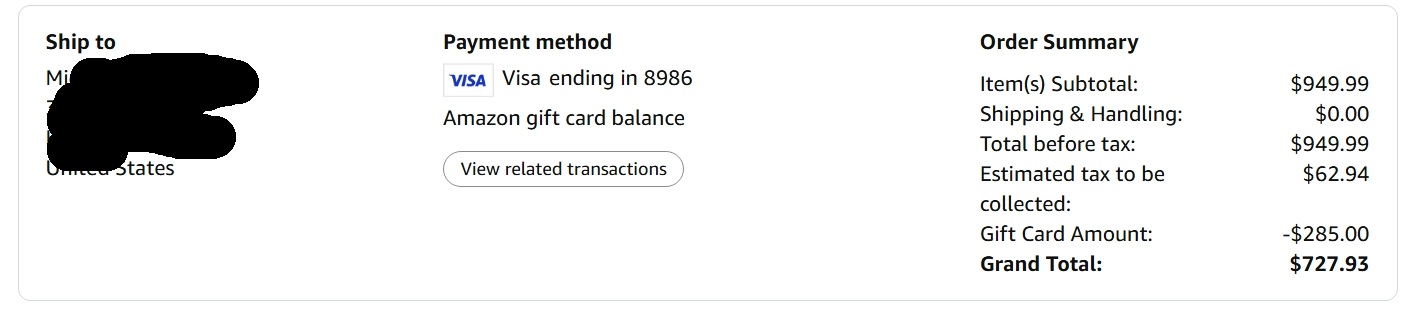
With OVS, I got the Bushveld tent ($2,699 on sale for $1,999) with the bushveld awning ($320) and the 4 person annex room ($670) with the tent lighting kit ($250) for roughly $3,183 total plus an extra $600 off with a coupon code. So with the previously purchased XD Nomadic 270 awning ($950) the total for my setup is $3,500. That’s $1,000 less than the cost of just the iKamper alone!
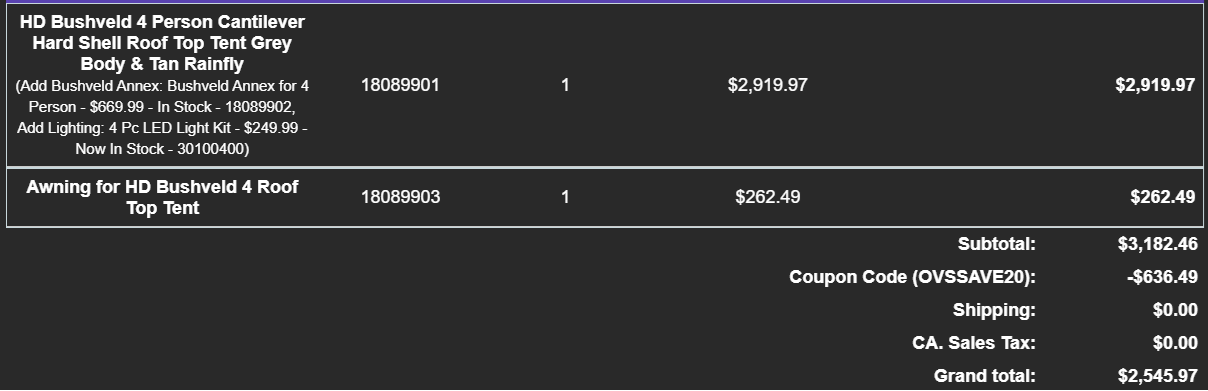
That’s the sweet spot I’m talking about. You’re getting hardshell reliability, a massive sleeping platform, four-season capability, and a real warranty — all before you hit the price range where the “premium” brands start. The jump from $2,800 to $4,000+ doesn’t get you 1.5x the tent. It gets you a nicer logo and maybe 15% weight savings.
The XD Nomadic 270: Why an Awning Isn’t Optional
Some people treat the awning as a nice-to-have. I treat it as essential. Here’s my thinking: the tent is where you sleep. The awning is where you live.
The XD Nomadic 270 wraps 270 degrees around the driver side of my Sierra. When it’s deployed, I’ve got 129 square feet of covered space — that’s bigger than some studio apartments I’ve seen in Jersey. The blackout coating actually works. In direct sun, the temperature underneath is noticeably cooler than standing in the open.
We pull in, pop the awning, set up chairs and the camp kitchen underneath, and we’re good. Nobody’s fighting over shade. Nobody’s getting rained on while they’re cooking.
For the build quality at $1,000, there’s nothing else in that range that touches it. The aluminum frame feels overbuilt. The poles lock into place without that sketchy wobble you get with budget awnings. And the integrated LED strip means you’ve got camp lighting without stringing up separate lights.
The Annex: Family Mode Activated
The annex room is why I can take my family of five on trips without cramming everyone into the tent like sardines. It zips directly onto the Bushveld — no drilling, no modifications — and hangs down to create a full enclosed room underneath the truck.
My wife and I sleep up top. The kids set up sleeping pads in the annex below. It’s not the Four Seasons, but they think it’s an adventure, and everyone has their own space. The 420-denier material is waterproof, and there are mesh windows for ventilation so it doesn’t turn into a sauna.
Here’s how I use the modular setup:
- Solo/buddy trips: Awning only. Quick setup, maximum chill space, minimal gear.
- Family trips: Awning + annex. More room for the kids, covered area for everyone, and my wife doesn’t have to share a sleeping platform with three kids who kick in their sleep.
- Bad weather: Annex becomes a gear room. Keep everything dry and organized instead of scattered around camp.
The flexibility is the whole point. I’m not locked into one configuration. I can scale up or down depending on who’s coming and what the weather looks like.
What I’d Change (Being Honest)
No tent is perfect, and I’m not going to pretend otherwise.
The weight. 208 pounds is real. You need a solid rack system rated for it, and your truck needs to handle the static and dynamic load. On the Sierra with a proper rack, it’s fine. On a smaller truck or SUV, you’d want to run the numbers. If you want something lighter, the Bushveld II (2-person) drops to 178 lbs, or you spend more and go iKamper at 165.
The mattress. It’s adequate. It’s not great. The 2-inch memory foam is serviceable for a weekend, but after three or four nights in a row, you’ll feel it. I’m probably going to swap it for an aftermarket 3-inch mattress at some point. This isn’t unique to OVS — most RTT mattresses are just okay.
The annex structure. Some owners have reported that the annex doesn’t have quite enough pole structure to stand perfectly taut in all conditions. In wind, it can billow a bit. It works, but it’s not rigid like a freestanding tent would be. For the price, it’s fine. Just don’t expect a bulletproof structure.
Setup height. Because it’s a cantilever design, you need clearance above and beside the truck. Not an issue at dispersed campsites, but in a tight campground with overhanging branches, you might need to think about placement.
Who This Is For
- Full-size truck owners who want the biggest sleeping area in a hardshell without spending $4,000+
- Family overlanders who need room to add an annex and awning for a modular camp setup
- Budget-conscious builders who recognize that the jump from $2,800 to $4,000+ isn’t giving you proportional quality gains
- Four-season campers who need a hardshell that keeps weather out — not a softshell that flaps in every breeze
- People who already run OVS gear and want to keep their setup within one ecosystem
Who Should Skip It
- Weight-sensitive builds on smaller trucks or SUVs where 175 lbs pushes your rack or payload limits
- Ultralight overlanders who prioritize low weight over sleeping space — look at the Bushveld II or a clamshell
- People who want maximum brand clout — iKamper has the name recognition and the Instagram following. If that matters to you, go for it. No judgment.
- Van/camper shell users — if you’re doing a full camper build, a GFC or similar platform makes more sense than a bolt-on RTT
The Bottom Line
I’ve been through the overlanding build cycle twice now. First with the Jeep and iKamper, now with the Sierra and OVS. The iKamper was great — I have zero complaints about the time I spent with it. But when I sat down to build my Sierra setup and looked at what things cost in 2025, the math pointed me to OVS.
The Bushveld gives me a bigger sleeping area than the Skycamp, a hardshell that handles Northeast weather without flinching, and a price tag that left me enough budget to add the awning and annex without wincing. That’s the whole equation.
If you’re in that spot where you know you want a hardshell RTT but you’re staring at $4,000+ price tags and wondering if there’s something just as good for less — there is. The Bushveld is it.
Why Trust This Review
This is my third overland build. I owned a Jeep Rubicon with an iKamper Skycamp, then a GMC Canyon where I first bought OVS gear, and now I am building out a 2025 GMC Sierra 1500. I am not a brand ambassador or influencer. I am a union lineman and a dad in a family of five. The receipts in this article are mine. The opinions are from actually sleeping in this tent with my family, not from an afternoon photoshoot at a media event.
FAQ
How long does the OVS Bushveld take to set up?
Under two minutes once you’ve done it a few times. Undo four latches, the nitrogen struts pop the lid, unfold the ladder, climb up. Breakdown is about the same in reverse. It’s one of the benefits of a hardshell over a softshell — no poles to mess with, no rainfly to fight.
Can the OVS Bushveld fit on a mid-size truck?
Technically yes, but watch your numbers. The tent is 175 lbs and has a 47-inch width when closed. Most mid-size trucks can handle it with a proper rack, but check your rack’s dynamic weight rating and your truck’s payload capacity first. I’d recommend running it through a payload calculator before buying.
Is the OVS Bushveld actually four-season?
The hardshell and waterproof rainfly handle cold, rain, and snow well. The ventilation windows keep it breathable in summer. I’ve used it in PA in early spring with temps in the low 30s and we were comfortable with proper sleeping bags. For serious cold, check our tent heater guide. It’s not insulated like a four-wall camper, but for a roof top tent, it performs well across seasons.
How does the OVS Bushveld compare to the iKamper Skycamp?
The Bushveld has a larger sleeping area (84" x 72" vs 83" x 55"), weighs more (175 vs 165 lbs), and costs significantly less (~$2,800 vs ~$4,000+). The iKamper is lighter, has a more refined fold-out mechanism, and has stronger brand recognition. Both are quality tents — the question is whether the weight savings and brand premium are worth $1,200+ to you.
Does OVS make an awning that connects to the Bushveld?
OVS makes several awning options, but the XD Nomadic 270 is what I run. It doesn’t physically connect to the tent — it mounts to your rack and provides 129 sq ft of freestanding shade around the side and rear of your vehicle. The annex room is what connects directly to the tent for enclosed space below.
Related: Overlanding Preparedness Guide | RigSafe Overland Configurator | Vehicle Profile Tool
External resources: OVS Bushveld product page | OVS XD Nomadic 270 Awning